Key Takeaways for 2026 Tax Planning
- Compliance vs. Strategy: CPAs handle tax preparation and audits (reactive), while strategists focus on legal loopholes and multi-year planning (proactive).
- Topical Depth: Modern tax management now requires a financial professional who understands the intersection of business taxes and estate planning.
- IRS Protection: Working with a strategist who is also a CPA provides a dual layer of protection: accurate filing and aggressive, legal risk mitigation.
- Wealth Creation: Efficient tax planning reduces tax liabilities, freeing up capital to build a business empire or a family legacy.
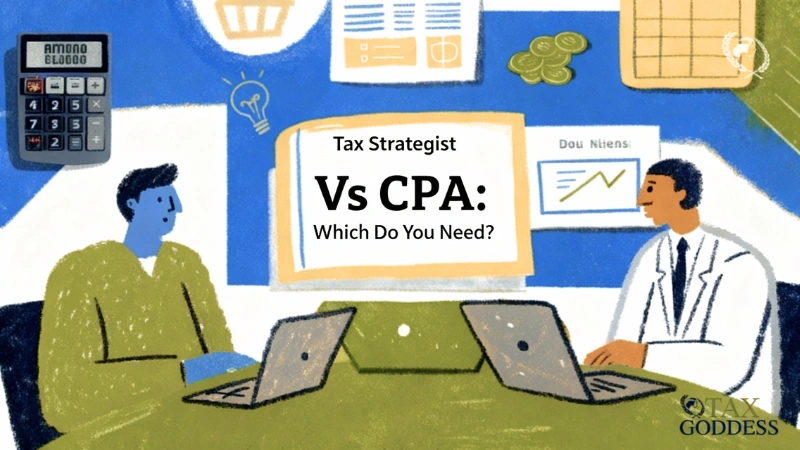
“Tax Strategist vs. CPA: Aren’t they the same?” It is a question we hear constantly. When tax season approaches, your primary goal is likely to file your return accurately and ensure you pay the least amount possible without triggering an IRS audit. However, as a business owner or high-net-worth investor in 2026, taxes represent one of your most significant recurring expenses. Understanding which financial professional best fits your specific needs is critical to your bottom line.
The Role of a CPA (Certified Public Accountant)
A CPA is a licensed professional who has met rigorous education and testing requirements, usually overseen by the American Institute of Certified Public Accountants (AICPA). While many CPAs specialize in tax, others focus on auditing, financial reporting, or corporate cost accounting.
Because many taxpayers with relatively simple filings turn to CPAs, it can be difficult to distinguish a generalist from an advisory expert who specializes in complex tax issues. A CPA provides essential infrastructure for your business, including:
- Monthly accounting and bookkeeping support.
- Financial statement auditing.
- Ensuring compliance with ever-changing federal and state filing requirements.
- Representation before the IRS during an audit.
Who is a Tax Strategist?
While many tax strategists are also CPAs, their focus is fundamentally different. A tax consultant specializing in strategy focuses on the future rather than the past. They study how to predict the consequences of tax codes for investment and business decisions. For these experts, tax planning is an art that requires constant refinement.
A strategy-focused professional specializes in navigating the Internal Revenue Code to help you reduce your tax burden while remaining fully compliant. Many hold a federal license as an Enrolled Agent (EA) or a specialized CPA designation, which grants them the legal right to represent clients before the tax authorities.
Key Differences: Compliance vs. Strategy
The primary difference lies in capacity and mindset. A tax CPA is often “reactive” (they help you report what has already happened and fix problems after they arise). Conversely, a tax professional focused on strategy is “proactive.” They identify legal loopholes and incentives to prevent high tax liabilities before the tax year even ends.
In the fast-moving 2026 economy, especially for those in real estate or tech, you cannot afford a “half-baked” advisor. You need someone who is tax-efficient and ready to implement advanced methods that move at the speed of your business.
A Checklist for Hiring
To ensure you are hiring the right expert for your 2026 tax needs, use this checklist:
- Identify Your Needs: Do you just need a clean filing (CPA), or do you have a high income that needs sheltering (Strategist)?
- Verify Credentials: Ensure they are a CPA, EA, or tax attorney with a focus on proactive planning.
- Check Specializations: Do they have experience in your specific niche (e.g., Real Estate, Crypto, or E-commerce)?
- Review Communication Style: Will they meet with you quarterly for long-term planning, or only once a year in April?
Why You Benefit from a Hybrid Professional
Ideally, you want an expert who bridges the gap. When your advisor is both a CPA and a skilled strategist, you get the best of both worlds: the technical precision of a licensed accountant and the forward-thinking vision of a strategist.
1. Stay Out of Trouble with the IRS: When your advisor has updated information on 2026 tax codes at both state and federal levels, you remain protected. They help you stay compliant while aggressively pursuing every legal deduction.
2. Lower Your Total Tax Bill: A tax-efficient professional focuses on your current situation while planning for the future. They spend months developing a custom, lifelong strategy that targets the specific loopholes applicable to your industry.
3. Build a Wealth Management System: The more money you save from unnecessary taxes, the more capital you have to reinvest. This creates a powerful feedback loop for wealth creation.
Frequently Asked Questions
What is the main difference between a Tax Strategist and a CPA?
The main difference is timing and focus. A CPA focuses on “compliance” (accurately reporting past financial data to the IRS). A tax strategist focuses on “planning” (creating a proactive roadmap to reduce future tax liabilities before year-end).
Can a CPA also be a Tax Strategist?
Yes. Many tax strategists are CPAs who have sought additional education in tax codes and wealth management. Hiring a professional who holds both titles is often the most tax-efficient way to manage a business.
Why is estate planning important for tax strategy in 2026?
In 2026, shifting regulations mean that without proper estate planning, you could lose a significant portion of your wealth to inheritance taxes. A strategist integrates your annual filings with your long-term legacy to protect your assets.
How much can a Tax Strategist save me?
While savings vary, a strategist aims to lower your overall tax burden by identifying deductions and legal loopholes that standard tax preparers often miss. This often results in savings that far exceed the cost of the professional’s fees.
Take-Home
If you simply need someone to organize your income on a tax return, a traditional CPA is a fine choice. However, if your financial situation requires customized tax reduction and a long-term vision, you need a strategist. To get the best results, hire a team that doubles as both, ensuring your business is both compliant and optimized for growth.
Ready to get the best of both worlds? Reach out to the Tax Goddess Team today!BOOK YOUR FREE CONSULTATION HEREyou can get a CPA. However, if your tax needs require customized tax reduction expertise, then you should work with a tax strategist, but if you want to get the best of both worlds, hire a tax expert who doubles as a CPA and a Tax strategist like Tax Goddess.
Ready to get the best of both worlds? Reach out to the Tax Goddess Team today!